CALIFORNIA STATE UNIVERSITY, SAN BERNARDINO
COLLEGE OF EDUCATION
Master of Arts in Education
Teaching English as a Second Language
Instructional Plan
Submitted by: Meyoung Noh
Title: WHO Says?
Grade: 5
Level: Intermediate EFL
Duration: 3hours 45minutes (45 minutes x 5times)
Objectives:
• Content Objective: To grasp how different points of view make different stories
• Language Objective: To tell the facts and opinions
• Learning Objective: To compare the different points of view
Standards:
California English Language Development Standards:
Intermediate ELD level
• Reading Comprehension: Intermediate ELD level, Grades 3-5
Use detailed sentences to respond orally to comprehension questions about text.
Read literature and content area texts and orally identify examples of fact and opinion and cause and effect.
Equipment: Computers, projector or TV screen
Materials:
• Work Sheet A-1: Pig vs Wolf
• Computer A-2: Silly Symphony-The Three Little Pigs
http://www.youtube.com/watch?v=Olo923T2HQ4
• Focus Sheet A-3: Three Pigs
• Computer A-4: The True Story Of the Three Little Pigs http://www.youtube.com/watch?v=Zllhr-dCQ8w&feature=related
• Formative Assessment A-5: One-Minute
• Focus Sheet A-6: Word List
• Focus Sheet A-7: In-Class Reading Methods
• Work Sheet A-8: Story Line
• Computer A-9: Story Reading
• Work Sheet A-10: Facts and Opinions
• Computer A-11: Jon Scieszka - Exclusive Video Interview
• Focus Sheet A-12: More Books.
• Formative assessment A-13: Exit Tickets
• Focus Sheet A-14: Your Voice
• Work Sheet A-15: Who says?
• Formative Assessment A-16: Student Survey
• Summative Assessment A-17: Portfolio
Warm-up: The teacher encourages a discussion by asking:
Do you know any stories starring wolves or pigs?
Who is the villain in most of the stories?
Why do you think they are villains?
Task Chain 1. Comparing the same stories with different points of view (2 periods)
First Period
- Explain task: For two periods, the students will grasp how different point of view can change the story. The teacher announce in advance that All the class products are filed in a portfolio.
- The teacher divides students groups of four.
- Using Work Sheet A-1: Pig vs Wolf, students compare two characters in stories.
- After showing Computer A-2: Silly Symphony-The Three Little Pigs (YouTube Video), the teacher encourages students include more characteristics they might add.
- Referring to Focus Sheet A-3: Three Pigs, the students in groups write a letter to blame on the wolf.
Second Period
- The teacher explains that this time they will meet Mr. Wolf and hear his side of the story.
- Before watching the video, the teacher asks some questions: What do you eat normally?
What do you think Wolves normally eat?
What would you do when someone casts dirt
on you or your family? How would you feel?
The teacher shows Computer A-4: The True Story Of the Three Little Pigs(YouTube Video).
- The teacher hands out the same Work Sheet A-1: Pig vs Wolf again. In groups of four, the students write the characteristics of the main characters in the video.
- The teacher helps students to compare what they wrote in period one with the one written in this period. The teacher has the students write the answers in the second paper.
Q: Do the two papers have differences?
Why did those changes happen?
10. Formative Assessment A-5: One-Minute Papers
Q. What is the most interesting thing we discussed today?
Task Chain 2. Understanding the reading material and identify the facts and opinions
Third Period
- Explain Task: The students read a book, The True Story of the Three Little Pigs, and figure out the facts and opinions.
- The teacher stimulates the students with the cover and pictures in the book.
"Look at the picture what it is like? Yes, It's a newspaper. Who do you think is reading it?
What do you think about the wolf in the picture? How does he look? Skim through the book and just look at the pictures. Look at the third pig and the guard. How do they look?"
- Before reading the book, the teacher hands out Focus Sheet A-6: Word List to help students understand the story better. The teacher takes some time to answer the questions about the words.
- The teacher reads the book aloud. While reading, the teacher points the pictures and lets students guess the next.
- Focus Sheet A-7: In-Class Reading Methods
The teacher does various reading activities.
- The teacher checks how well the students understand by using Work Sheet A-8: Story Line.
Fourth Period
- The teacher reminds the students of the story and if necessary, the students listen to the story again. Computer A-9: Story Reading, http://www.youtube.com/watch?v=zn_LjA-pg2Y&feature=related
- Using the Work Sheet A-10: Facts and Opinions, the students find the fact and opinions of the story from the objective third person point-of-view.
- The teacher introduces the writer. The teacher could use Computer A-11: Jon Scieszka - Exclusive Video Interview or simply introduce his books. Focus Sheet A-12: More Books.
10. Formative assessment A-13: Exit Tickets
Qs: 1. What are the facts in the story book?
2. Why should opinion be treated differently from facts?
Task Chain 3. Comparing the characters with different points of view.
Fifth Period
- Explain Task: The students listen and compare what the other side says on the same incident.
- The teacher reminds students of Mr. Wolf and three pigs in a neutral way.
- The teacher has students side with pigs or Mr. Wolf. Each side gathers separately. Members in each side write why the other side is wrong or bad. The teacher gives out Focus Sheet A-14: Your Voice. Each writes one sentences on a strip of paper. At least over five different statements should be written.
- The teacher organizes a forum. Each team chooses two representatives each. In turns, students insist why they side with pigs or Mr. Wolf.
- After listening all the opinions, the students write a comparative passage using Work Sheet A-15: Who says? as an assignment.
- Formative Assessment A-16: Student Survey
7. Summative Assessment A-17: Portfolio
Citation of Sources:
Diaz-Rico, L.T. (2008). Strategies for Teaching English language Learners. Boston, MA: Pearson Education. p. 119, p. 183
Formative Assessment Strategies. Retrieved from
http://www.lincoln.k12.or.us/Files/Formative%20
Work Sheet A-1: Pig vs Wolf
Group Members __________________________Period___ Date___
computer A-2: Silly Symphony-The Three Little Pigs
http://www.youtube.com/watch?v=Olo923T2HQ4
http://www.google.com/images?um=1&hl=en&client=firefox-a&rls=org.mozilla%3Ako%3Aofficial&biw=1366&bih=605&tbs=isch%3A1&sa=1&q=three+little+pigs&aq=f&aqi=g10&aql=&oq=&gs_rfai=
Focus Sheet A-3: Three Pigs
First Pig: Hi, I am the youngest. I like to sing and dance. I love my mom and brothers. I built a nice, cozy straw house. It was so beautiful but it's gone now. I am so sad. The wolf is cruel. He tried to eat me and broke down my cozy house.
Second Pig: Hi, I am the second. I like to sing and dance, too.
Third Pig: Hi, I am the third and the oldest. I am
Computer A-4: The True Story Of the Three Little Pigs http://www.youtube.com/watch?v=Zllhr-dCQ8w&feature=related
http://www.google.com/images?um=1&hl=en&client=firefox-a&rls=org.mozilla%3Ako%3Aofficial&biw=1366&bih=605&tbs=isch%3A1&sa=1&q=three+little+pigs&aq=f&aqi=g10&aql=&oq=&gs_rfai=
Formative Assessment A-5: One-Minute Papers
Q. What is the most interesting thing we discussed today?
One-Minute Papers
a. Give students an open-ended question and one to three minutes to write their answers.
b. Good questions: What is the most important thing we discussed today? Or What was the most
confusing idea presented today?
c. Collect the papers and use for promoting discussion, identifying misconceptions, or confusion.
d. Photocopy samples of the papers to use with your reflections.
Retrieved Sep. 5th from http://www.lincoln.k12.or.us/Files/Formative%20Assessment%20Strategies.pdf
Focus Sheet A-6: Word List
diet 1. Your diet is the type and range of food that you regularly eat. 2. If you're dieting, you eat special kinds of food or eat less food than usual.
bright 1. A bright idea is clever and original. 2. A bright color is strong and noticeable, and not dark.
straw 1. Straw consists of the dried, yellowish stalks from crops such as wheat or barley. 2. A straw is a thin tube of paper or plastic, which you use to suck a drink into your mouth.
lie 1. A lie is something that someone says or writes which they know is untrue. 2. If you are lying somewhere, you are in horizontal position and are not standing or sitting.
helping A helping of food is the amount of it that you get in a single serving.
jazz up to make something more lively or interesting
frame 1. If someone frames an innocent person, they make other people think that that person is guilty of a crime, by lying or inventing evidence. 2. When a picture or photograph is framed , it is put in a frame.
run out of to lose the energy, enthusiasm, etc, that you had before.
be about to be going to do something immediately
dead as a doornail completely dead
spoil If food spoils or if it is spoilt, it is no longer fit to be eaten.
impolite If you say that someone is impolite, you mean that they are rather rude and do not have good manners.
Focus Sheet A-7: In-Class Reading Methods (Diaz-Rico, 2008, p.183).
Work Sheet A-8: Story Structure (Diaz-Rico, 2008, p. 119)
Beginning


Computer A-9: Story Reading http://www.youtube.com/watch?v=zn_LjA-pg2Y&feature=related
http://www.google.com/images?um=1&hl=en&client=firefox-a&rls=org.mozilla%3Ako%3Aofficial&biw=1366&bih=605&tbs=isch%3A1&sa=1&q=three+little+pigs&aq=f&aqi=g10&aql=&oq=&gs_rfai=
Work Sheet A-10: Facts and Opinions
| Facts |
| Opinions |
|
|
|
|
Computer A-11: Jon Scieszka - Exclusive Video Interview http://www.youtube.com/watch?v=dPCeewYIDVk
from http://www.jsworldwide.com/proclamation.html
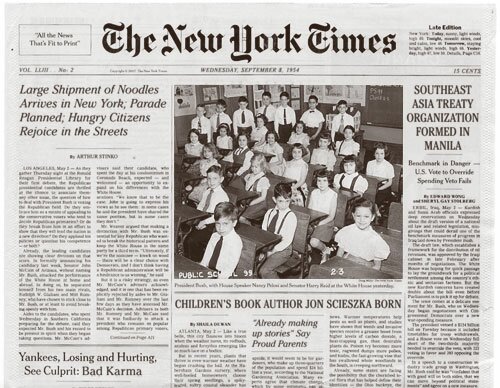
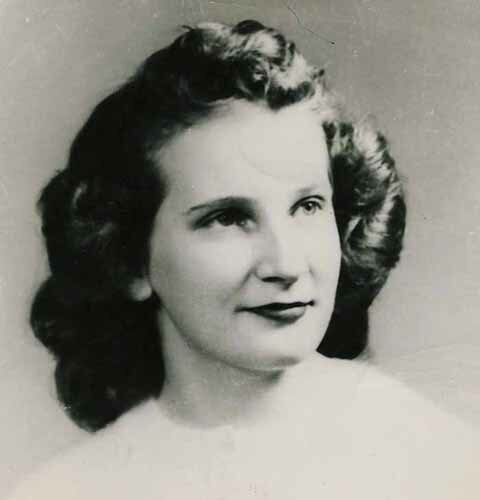
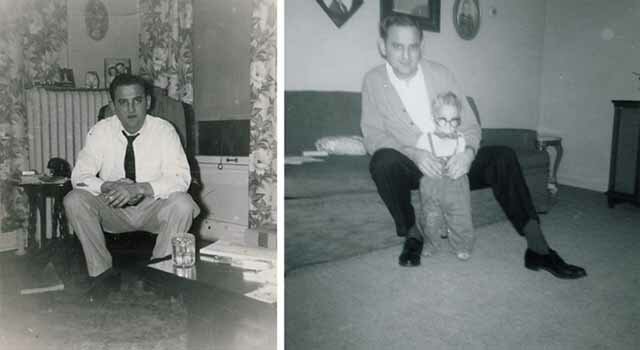
Jon Scieszka was born in Flint, Michigan on September 8, 1954. It was a Wednesday. Right around lunchtime. He is the second-oldest, and nicest, of six Scieszka boys. No girls. His mother, Shirley, worked as a egistered nurse. His dad, Louis, was an elementary school principal at Freeman Elementary. His dad's parents, Michael and Anna, came to America from Poland. "Scieszka" is a word in Polish. It means "path." Jon went to Culver Military Academy for high school. He had some spectacular teachers there, and became Lieutenant Scieszka. Jon thought about being a doctor and studied both Science and English at Albion College in Albion, Michigan. He graduated in 1976, lived in Detroit, then moved to Brooklyn, NY to write instead. He earned his MFA in Fiction from Columbia University in New York in 1980, then painted apartments. Not knowing what he was getting into, Jon applied for a teaching job at an elementary school called The Day School in New York City. He started as a 1st grade Assistant Teacher, graduated to teaching 2nd grade, taught 3rd and 4th grade Math, 5th grade History, and then some 6th, 7th and 8th grade. Teaching school, Jon re-discovered how smart kids are, and found the best audience for the weird and funny stories he had always liked to read and write. He took a year off from teaching to write stories for kids. He sent these stories around to many publishers, and got rejected by all of them. He kept painting apartments and writing stories. Through his wife Jeri, who was working in NY as a magazine art director, he met a funny guy named Lane Smith. Lane was painting illustrations for magazine articles, and working on his first children's book. Jon gave Lane his story—A. Wolf's Tale. Lane loved it. Lane drew a few illustrations for the story and took it to show many publishers. He got rejected by all of them. "Too dark," they said. "Too sophisticated," they said. "Don't ever come back her, okay?" they said. Jon and Lane liked A. Wolf's Tale. They kept showing it around. They kept getting rejected. Finally, Regina Hayes, an editor at Viking Books said she thought the story and the illustrations were funny. She said she would publish the book. And she did, in 1989, with the title changed to: The True Story of the 3 Little Pigs!. 3 Pigs! has now sold over 3 million copies and has been translated into 14 different languages. Over the last 19 years, Jon and Lane have worked together on 8 picture books and 8 Time Warps. Lane's wife Molly Leach has designed all of their picture books. Jon's books have won a whole mess of awards, and sold over 11 million copies all around the world. Jon is now working on a giant pre-school publishing program called Trucktown. It's a world where all of the characters are trucks. And all of the trucks act like real preschoolers—loud and crazy and wild and funny. Jon still lives in Brooklyn with his wife Jeri. They have two children: a daughter Casey, and son Jake.
Jon's favorite color (this week) is dark green.
Jon's favorite foods are NY pizza and noodles of every kind.
Jon's favorite sports are hockey, golf, and caber tossing.
Focus Sheet A-12: More Books.
To get more information, please visit Writer's Site
http://www.jsworldwide.com/proclamation.html
Formative assessment A-13: Exit Tickets
Exit Tickets
a. Give students “tickets” – small pieces of paper designed to look like tickets, but with space for writing.
b. Ask students two questions. One that requires a factual answer about the big idea of today’s lesson, but in their own words. A second question should require more explanation of a concept.
c. Give students five minutes at the end of class to write their answers. Their names do not go on these exit tickets.
d. They must give you an Exit Ticket to leave class for the day.
e. Analyze the tickets to learn how many students got the big idea and how they understand it or misunderstand it. Photocopy 4-6 on a single sheet of paper for your portfolio. Select ones that you learned something about your students from that you didn’t know before reading the Exit Tickets.
Retrieved Sep. 5th from http://www.lincoln.k12.or.us/Files/Formative%20Assessment%20Strategies.pdf
Work Sheet A-14: Your Voice
Each student writes one sentence on a strip of paper.
|
|
|
|
|
|
|
|
|
|
|
|
|
|
|
|
|
|
|
|
|
|
Work Sheet A-15: Who Says?
1. A: Wolves are bad.
B: Who says?
A: Pigs do.
B: You know why?
__________________________________________________________________________________________________________________
2. A: Pigs are dumb.
B: Who says?
A: Wolves do.
B: You know why?
__________________________________________________________________________________________________________________
3. Make your own lines.
Formative Assessment A-16: Student Survey
Student Survey
| In this class I feel: |
Important 1 2 3 4 5 Ignored
Comfortable 1 2 3 4 5 Uncomfortable
Involved in the lessons 1 2 3 4 5 Restless, Bored
Part of a Team 1 2 3 4 5 Alone
Sure of where I stand 1 2 3 4 5 Not sure where I stand
| The teacher has been: |
Prepared 1 2 3 4 5 Unprepared Fair 1 2 3 4 5 Unfair
Helpful 1 2 3 4 5 Unhelpful
Well-Organized 1 2 3 4 5 Lacking Organization
Clear about what's 1 2 3 4 5 Unclear about what's expected expected
Sensitive to my needs 1 2 3 4 5 insensitive to my needs
Fully engaged and excited 1 2 3 4 5 Seemingly bored
Knowledgeable 1 2 3 4 5 Not on top of the
subject
| Our Work has generally been: |
Thought provoking 1 2 3 4 5 Dull
Effective in helping me learn 1 2 3 4 5 Ineffective
Too fast 1 2 3 4 5 Too slow
Too easy 1 2 3 4 5 Too hard
Too much the same 1 2 3 4 5 Too unpredictable
Too abstract 1 2 3 4 5 Too simplistic
Too little 1 2 3 4 5 Too much
http://www.lincoln.k12.or.us/Files/Formative%20 Assessment%20Strategies.pdf
Summative Assessment A-17: Portfolio
Students who have all the materials will get the good grade. The followings are "Things should be in the portfolio". Each missing part will be responsible for losing two points. (Total 20 points)
1. Cover Name: Who Says? or You can choose your own name.
2. Contents: You list up what are in the portfolio.
3. Work Sheet A-1: Pig vs Wolf (1)
4. Focus Sheet A-3: Three Pigs
5. Formative Assessment A-5: One-Minute
6. Focus Sheet A-6: Word List
7. Work Sheet A-1: Pig vs Wolf (2)
8. Work Sheet A-8: Story Line
9. Work Sheet A-10: Facts and Opinions Focus Sheet A-12: More Books.
10. Work Sheet A-15: Who Says?
You did a great job. Thank you.
Meyoung Noh.